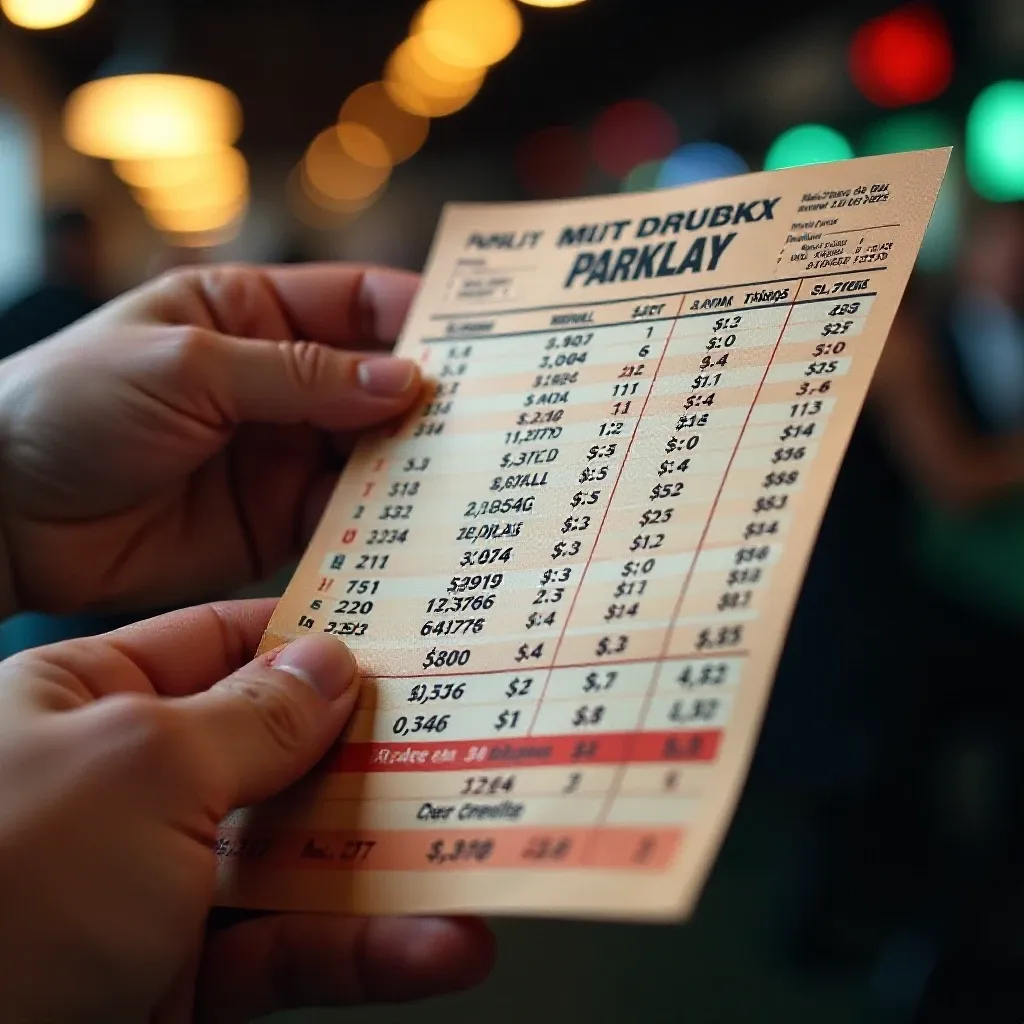
I remember being at the track one day, watching a friend sweat over a horse race, convinced he’d won big. Turns out, he’d misread his betting slip and celebrated a payout that wasn’t coming. That moment hit home: understanding your sports betting slip isn’t just a formality; it’s the key to knowing exactly what you’re betting on and what you stand to gain. No one wants to be that person who thinks they’ve hit the jackpot, only to find out they’ve misread the fine print.
In the world of sports betting, the betting slip is your contract, your confirmation, and your potential goldmine all rolled into one. By mastering the art of reading a betting slip, you not only take control of your bets but also unlock the potential for bigger profits. It’s about transforming from a casual observer to a savvy player who understands the game inside and out. So, let’s decode those slips and turn betting from a game of chance into a strategy for success.
Decoding the Betting Slip: Key Terminology
Navigating the world of sports betting can feel like deciphering a secret code, especially when faced with a betting slip filled with unfamiliar terms. Understanding the language used is the first step to placing informed bets. This section breaks down the essential terminology found on most betting slips, turning jargon into plain English.
Here’s a look at some common terms:
- Stake: This is the amount of money you’re wagering on a particular bet. Think of it as your initial investment.
- Odds: Odds represent the ratio between stake and profit on a bet. They dictate how much you could win relative to your stake.
- Payout: The total amount you receive if your bet wins, including your original stake and the profit.
- Liability: Primarily used in betting exchanges, liability refers to the amount of money a backer stands to lose on a particular bet.
- Ticket Number: A unique identifier for your specific bet, crucial for tracking and verifying your wager.
Beyond these basics, betting slips might include more complex terms depending on the type of bet placed:
- Parlay: A single bet that links multiple individual wagers together. All parts of the parlay must win for the bet to pay out.
- Teaser: A type of parlay that allows you to adjust the point spread in your favor for each game, but usually at reduced odds.
- If Bet: A series of bets that are contingent upon the previous bet winning. If the first bet wins, the stake rolls over to the next bet.
With a grasp of these fundamental terms, you can confidently approach a betting slip and understand where your money is going – and what you stand to gain.
Understanding Different Bet Types
Navigating the world of sports betting begins with understanding the various bet types available. Each bet offers a unique way to engage with the game, bringing different risk and reward profiles.
Moneyline
A moneyline bet is the simplest form of wagering: picking the outright winner of a game. The odds are expressed as either positive or negative numbers. For example, if the Lakers are -150 against the Celtics, a bettor needs to wager $150 to win $100. Conversely, if the Celtics are +130, a $100 bet would win $130. On the betting slip, this is usually indicated as “ML” followed by the team name and odds.
Spread Betting (Point Spread)
Spread betting, also known as point spread, involves betting on the margin of victory. If the Cowboys are favored by -3.5 points against the Eagles, they need to win by 4 or more points to cover the spread. The Eagles, as the underdog at +3.5, can lose by up to 3 points or win the game outright. The betting slip displays this as “Spread” or “Pts” followed by the team and +/- the spread number.
Over/Under (Totals)
Over/Under, or Totals, is a bet on the combined score of both teams. The sportsbook sets a total, and the bettor wagers whether the actual combined score will be over or under that number. If the total is set at 210.5, the slip will show “O/U 210.5,” and bettors choose either “Over” or “Under.” Some sportsbooks could use the term “Totals” instead of “Over/Under” on the betting slip.
Parlays
A parlay combines multiple bets into one. To win, all individual bets within the parlay must be successful. While parlays are harder to win, they offer significantly higher payouts. A betting slip indicates a parlay by listing all selected bets with a “Parlay” or “Multi” notation.
Teasers
Teasers are a variation of parlays, common in football and basketball, allowing bettors to adjust the point spread or total in their favor in exchange for a lower payout. Like parlays, all legs of a teaser must win for the bet to pay out. Teasers will be marked as “Teaser” on the betting slip and show the adjusted spreads/totals.
Prop Bets (Player Props, Game Props)
Prop bets, short for proposition bets, focus on specific events within a game, rather than the final outcome. Player props might include how many touchdowns a Quarterback will throw. Game props could be whether there will be a safety in a football game. The betting slip will list the specific proposition with its corresponding odds.
Futures Bets
Futures bets are long-term wagers placed on events that will happen in the future, such as which team will win the Super Bowl or the NBA Championship. These bets are typically placed well in advance of the event. The betting slip will clearly state that it’s a “Future” bet, followed by the event and selection.
Live (In-Game) Wagering
Live wagering involves placing bets after a game has already started. Odds and lines are continuously updated based on the game’s progress, creating an engaging and dynamic betting experience. These bets are clearly marked as “Live” or “In-Play” on the betting slip.
Step-by-Step Guide to Reading a Betting Slip
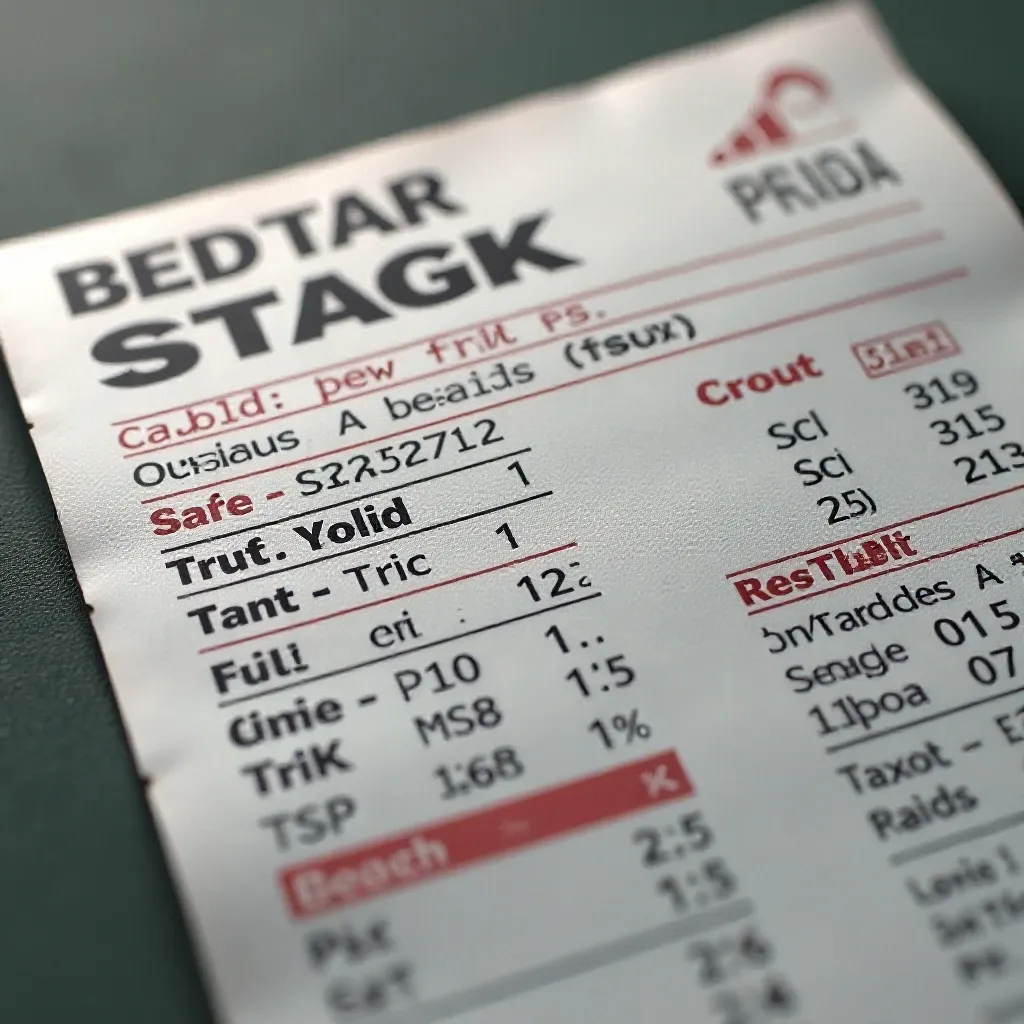
Decoding a betting slip might seem like deciphering a secret code at first glance, but it’s simpler than it looks. This guide breaks down the process, transforming you from a novice into a confident bettor who understands every detail on that slip.
- Locate the Event/Game Details: The first thing to spot is the specific sporting event you’ve bet on. This includes the sport (e.g., football, basketball), the teams or players involved, and the date and time of the event. Think of it as the who, what, and when of your bet.
- Identify the Bet Type: Next, pinpoint the type of bet you placed. Was it a moneyline bet (simply picking the winner), a point spread bet (betting on the margin of victory), an over/under bet (wagering on the total points scored), or something else? The betting slip should clearly state the type of wager. Recognizing the bet type is key to understanding how you can win.
- Understand the Odds: The odds represent the payout you’ll receive if your bet wins, relative to your stake. These odds can be displayed in various formats (fractional, decimal, or moneyline), so make sure you know how to interpret them. Learn to quickly assess whether the odds offer good value.
- Verify the Stake Amount: This is the amount of money you’ve wagered on the bet. Double-check that the stake amount listed on the betting slip matches what you intended to bet. It’s always wise to be certain.
- Confirm the Potential Payout: The betting slip should display the potential payout if your bet is successful. This number includes your original stake plus your winnings. Knowing the potential payout helps you evaluate the risk-reward of your bet.
- Check for Errors: Before walking away or finalizing your online bet, scrutinize the entire betting slip for any errors. This includes the event details, bet type, odds, and stake amount. Correcting mistakes early can save you from headaches later on.
Checklist for Avoiding Betting Slip Confusion
- .] Did you verify the correct teams are listed?
- .] Is the bet type clearly identified (e.g., Moneyline, Spread, Total)?
- .] Do you understand the odds format (e.g. American, Decimal, Fractional)?
- .] Is the stake the amount you intended to bet?
- .] Have you confirmed the potential payout if you win?
- .] Did you review for any discrepancies before finalizing?
With this guide and checklist, you’re well-equipped to confidently read and understand any betting slip. Happy betting!
Reading the Odds
Decoding betting odds is a fundamental skill for anyone looking to engage in sports betting. Odds represent the likelihood of an event occurring and are the cornerstone for calculating potential payouts. They come in different formats, primarily American, Decimal, and Fractional, each offering a unique way to assess risk and reward.
American Odds (Moneyline)
American odds, also known as moneyline odds, are prevalent in the United States. They are expressed with a plus (+) or minus (-) sign. A minus sign indicates the amount you need to bet to win $100, while a plus sign shows the amount you win for every $100 wagered. For example, -150 means you must bet $150 to win $100, while +200 means a $100 bet wins you $200.
To calculate the payout with American odds:
- For negative odds: Payout = (100 / |Odds|) Bet Amount
- For positive odds: Payout = (Odds / 100) Bet Amount
Decimal Odds (European)
Decimal odds are commonly used in Europe, Canada, and Australia. They represent the total payout for every $1 wagered, including the return of your stake. For instance, an odd of 2.50 means that for every $1 you bet, you’ll receive $2.50 back, which includes your initial dollar.
The payout calculation is straightforward:
Payout = Decimal Odds Bet Amount
Fractional Odds (British)
Fractional odds are popular in the United Kingdom and Ireland. They are expressed as a fraction, such as 1/1 (evens), 2/1, or 5/2. The first number represents the amount you could win, while the second number is the amount you need to bet. For example, 2/1 means you win $2 for every $1 you bet, plus you get your stake back.
To calculate the payout:
Payout = (Fraction Bet Amount) + Bet Amount
Quickly Assessing Implied Probability
Each odd format provides an implied probability of an outcome. Being able to quickly estimate this probability can help you identify potentially valuable bets. While precise calculations offer the most accuracy, you can often get a sense of the implied probability at a glance.
Converting Between Odds Formats
Being capable of converting between these formats allows for a broader understanding of sports betting as a whole. The table listed below provides an easy format for converting between the three types of odds.
| American | Decimal | Fractional |
|---|---|---|
| +200 | 3.00 | 2/1 |
| -150 | 1.67 | 2/3 |

Common Mistakes and How to Avoid Them
Navigating the world of betting can be an exciting venture, but it’s also fraught with potential pitfalls. Among the most disheartening experiences is realizing you’ve made a mistake on your betting slip – a slip that holds your hopes and wagers. Many errors can turn a potentially profitable day into one of frustration. Recognizing these common betting slip errors is the first step toward safeguarding your investments and improving your overall betting strategy.
One frequent mistake is misreading the odds. Odds can be presented in various formats (fractional, decimal, American), and a simple misinterpretation can lead to placing a bet that doesn’t align with your intended risk and reward. Always double-check the odds format and ensure you understand the potential payout.
Another common issue arises from confusing bet types. Parlays, teasers, and exotic bets offer higher payouts but come with increased complexity and risk. Failing to fully understand the terms and conditions of each bet type can result in unexpected outcomes. Always confirm event dates and times to avoid betting on already finished.
Overlooking voided bets is another pitfall. A voided bet, often due to a player injury or event cancellation, should result in a refund. It’s essential to verify that the refund is correctly processed and reflected in your account. Always check your betting slip before walking away from the window.
Finally, not verifying all ticket details can be a costly mistake. Discrepancies between what you intended to bet and what’s printed on the slip can occur due to human error or system glitches. Remember to understand each house rules.
Advanced Strategies and Tips
Seasoned sports bettors often employ advanced strategies to gain an edge. These techniques require a deeper understanding of sports betting principles and can significantly impact profitability.
Hedging Bets: Minimizing Risk, Maximizing Potential
Hedging involves placing additional bets opposite to an initial bet to guarantee a return, no matter the event’s outcome. This is particularly useful when new information, such as injuries or changing odds, alters the perceived probability of the initial bet. For example, if you bet on a team to win a championship at the start of the season, and they reach the final, you might hedge by betting on their opponent to secure a profit regardless of the final result. However, incorrect hedging can result in leaving considerable money on the table. It’s a financial strategy to minimize losses or secure profits.
Correlated Parlays: Spotting the Connections
Correlated parlays combine multiple bets that are statistically likely to occur together. Unlike standard parlays, where the odds of each leg are independent, correlated parlays exploit dependencies between events. Identifying these correlations requires a deep understanding of the sport and statistical analysis. Savvy bettors look at opportunities to exploit correlated outcomes to enhance the odds of their parlay bets.
Line Shopping: Finding the Best Value
Line shopping involves comparing odds from different sportsbooks to find the most favorable line for a bet. This strategy capitalizes on discrepancies in how bookmakers assess probabilities. While seemingly minor, differences in odds can accumulate over time, significantly increasing long-term profitability. Disciplined line shopping is a hallmark of successful sports bettors.
Implied Probability vs. Perceived Value
Understanding the difference between implied probability (derived from the odds) and perceived value (your assessment of the likelihood of an outcome) is crucial. Identifying situations where your perceived probability is higher than the implied probability creates opportunities for “+EV bets”. This relies on informed judgments and an understanding of market inefficiencies.
Remember, responsible gambling should always be a priority. Sports betting should be approached as a form of entertainment, not a guaranteed source of income. Continuous learning and adaptation are essential for long-term success in the dynamic world of sports betting.
Conclusion
Mastering the art of reading a betting slip is essential for anyone venturing into sports betting. It’s not just about placing a wager; it’s about making an informed decision, understanding the stakes, and knowing exactly what potential returns to expect. A betting slip is a detailed record that ensures clarity and accuracy, whether you’re betting in person or online. Think of it as a bridge between you and the bookmaker. By understanding the information on the slip, such as the event, bet type, odds, and potential payout, bettors can avoid errors and take control of their betting experience.
Continuously learning and staying informed is important in responsible gambling. Future bettors are encouraged to join a community forum or subscribe to a newsletter for more insights. Remember, informed betting is smart betting. Armed with the knowledge of how to read a betting slip, you’re well-equipped to navigate the world of sports betting with confidence. Take control, place informed bets, and enjoy the game responsibly.